
Cultist is card game about begining of the religions and the way they grow, interact and even become immortal. Can you outgrow the world that contains yourself and become much bigger?
Cultist is a turn-based card game with an anthropological theme that captures the religions and history of the ancient Mediterranean and Middle Eastern world. Through the game, players can become powerful religions and ideas that endure the trials of time, or become mere traces left in relics. About Cultist The cards in the game each represent diverse doctrines and ideas befitting their historical background.
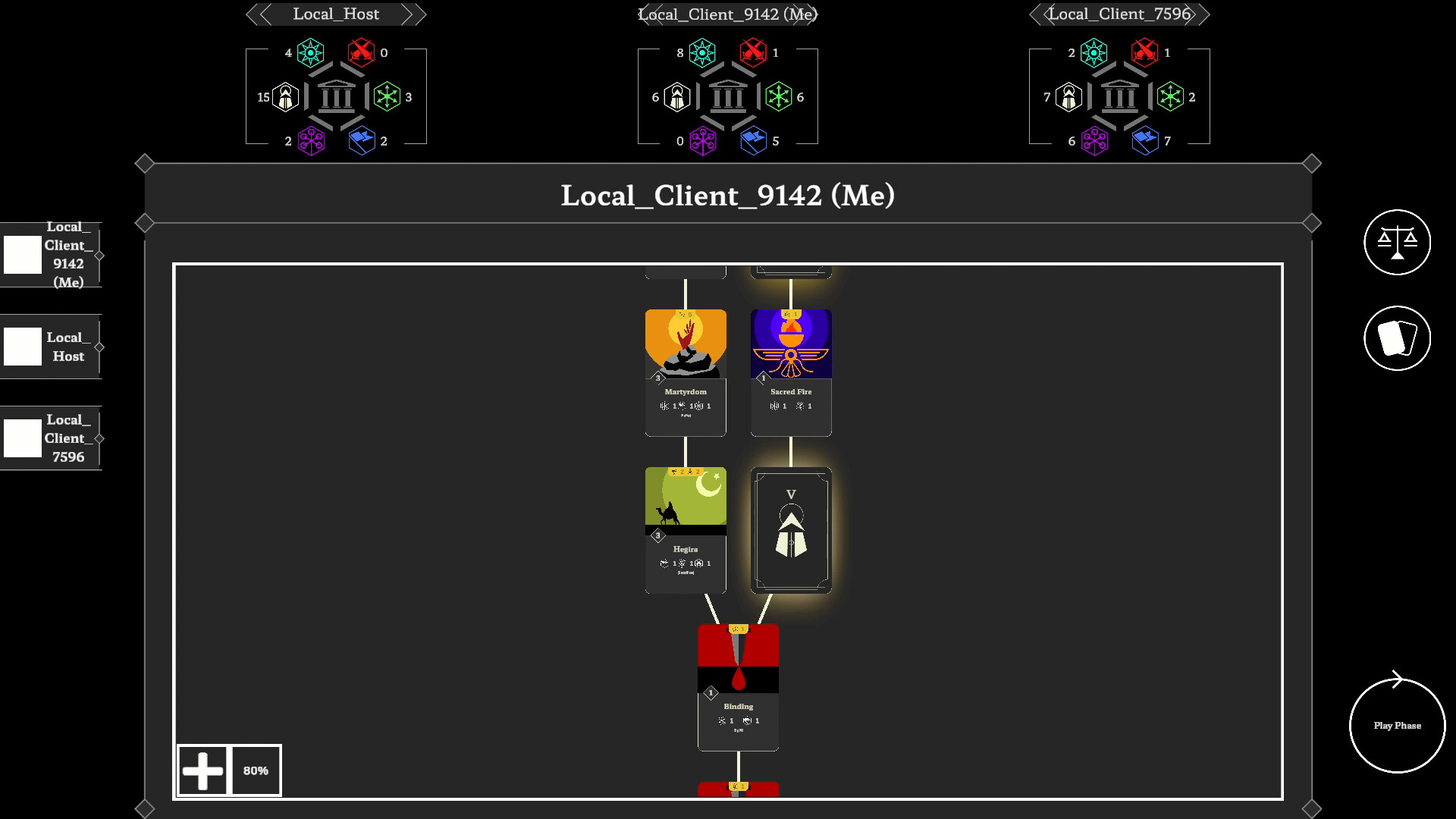
They grow and develop based on the participation of new cultists. What begins as a simple Beliefs, or merely a collection of those, expands through play into cults and sects, eventually branching into forms resembling actual classical religions. The overall flow of the game varies each time according to the cards used and their sequence, but the common theme lies in the interactions, commonalities, and mutual influences among early religions.
Religion and It's cultists Cultists are the source that provides you with the doctrines that strengthen you, but they also serve as the substance that sustains you as an idea itself. When a Cultist is flipped over and used as doctrine, it can no longer function as a Cultist; and after the first turn, any religion that loses all of its Cultists is defeated. Holding many Cultists is a way to protect yourself from other aggressive religions and ideas, and at the same time an excellent strategy for adding compelling ideas to your religious community.
There are various ways to add Cultists. 1. The basic method By default, every turn each player has one opportunity to draw cards at the start of their turn.
At this point, they choose one of the following: a. Draw Cards: Look at three cards from your deck and add one to your religion. Discard the remaining two.
b. Trade: Take one card of your choice from among the discarded cards. 2.
Additional methods Some cards allow you to draw additional cards in various situations, such as every turn or when a card is flipped. When the text states "perform an additional Draw Cards," follow action a; when it states "perform an additional Trade," follow action b. Unlike the basic method described above, these additional methods do not have to be performed at the start of the turn; once their conditions are met, this opportunity may be used at any point before the turn ends.
Be cautious, however—cards that allow you to gain additional cards can be dangerous. Deck Building The Early Access version of this game comes with four pre-built decks that will help you get a feel for play. However, building your own deck will deepen your understanding of the cards and help to find unconventional strategies.
A deck consists of 31 cards including 1 starting card, and you may include up to 3 copies of any given non-starting card. There are no other restrictions on card selection: you may use cards from a wide range of religious themes, or focus on a concentrated build. But be careful—if you don't check the required symbols, you may find that cards you've added to your deck can't actually be played.
Always check the types and number of symbols a card provides, and consider whether they can meet the symbol requirements of your other cards. A deck consists of 31 cards including 1 starting card, and you may include up to 3 copies of any given non-starting card. There are no other restrictions on card selection: you may use cards from a wide range of religious themes, or focus on a concentrated build.
But be careful—if you don't check the required symbols, you may find that cards you've added to your deck can't actually be played. Always check the types and number of symbols a card provides, and consider whether they can meet the symbol requirements of your other cards. Card Mechanics: Sacrifice and Destroy Besides drawing additional cards, flipping cards produces various effects on the field, and you must consider these factors when building a deck.
Sacrifice Some cards require Sacrifice. Sacrifice is performed on Cultist cards you own, and once triggered, the selected Cultist card is immediately destroyed. Cards and effects that can be used by sacrificing a Cultist card carry powerful effects capable of turning the tide of the game.
Destroy Some cards have a direct impact on other players by destroying their Cultist cards. Because this is an extremely powerful mechanic, such cards may require additional conditions—for example, possessing greater Military Power than the opponent, or holding another combo card. Don't worry.
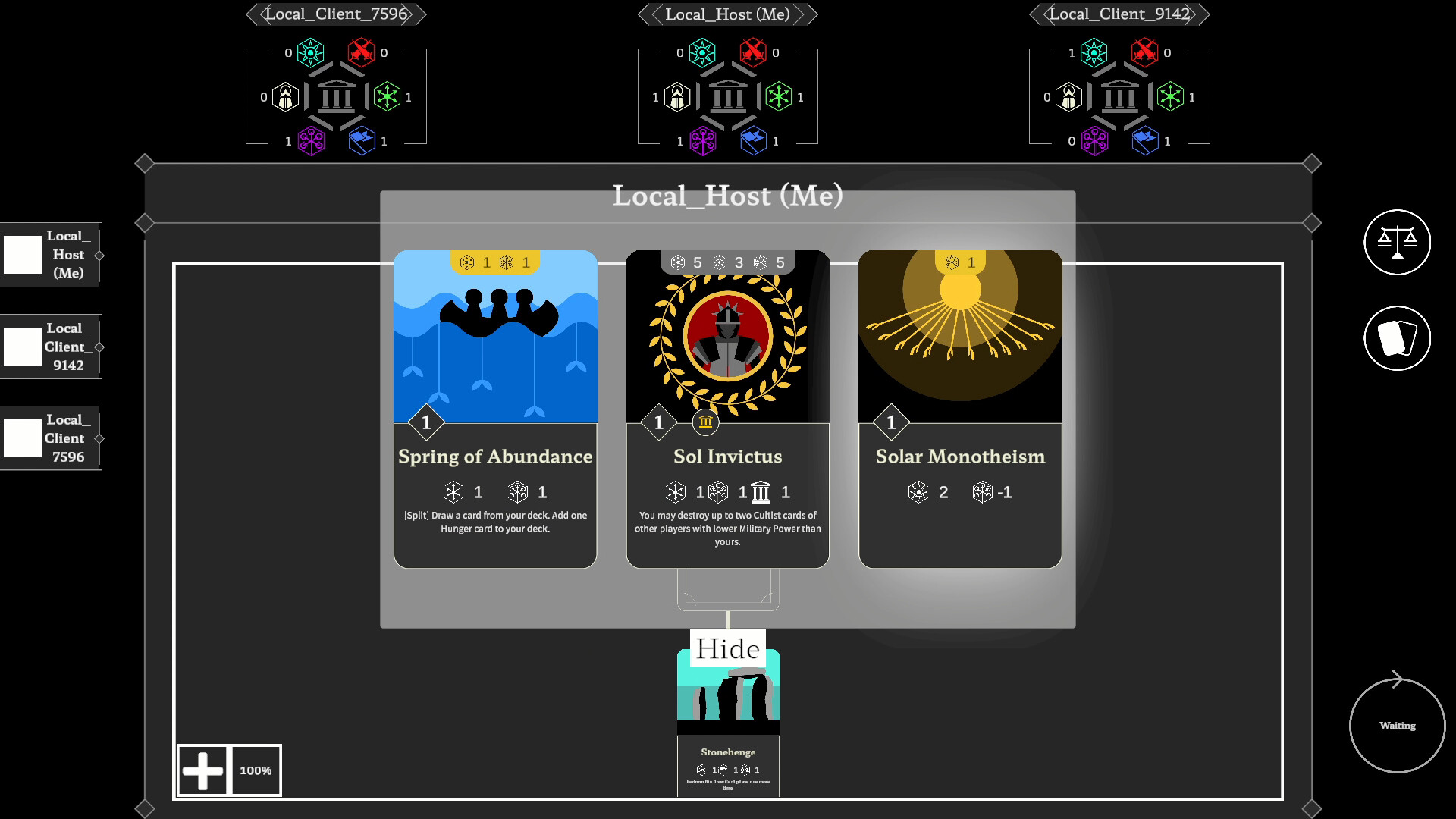
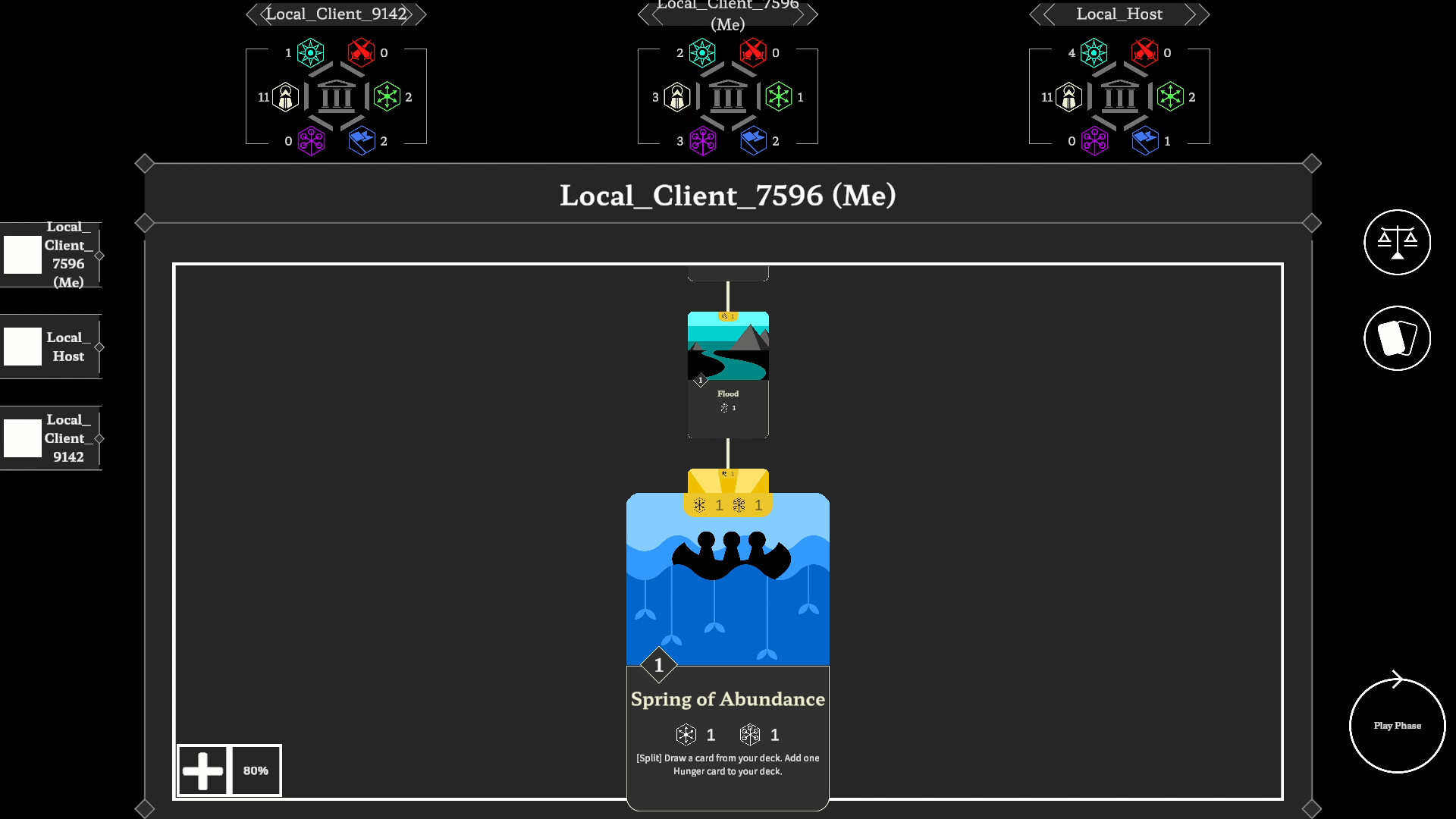
Cultist cards that have been sacrificed or destroyed are not removed from the game; they move into the trade pile, where they may be introduced to other players. In addition, some cards carry various keywords, and these provide important information for play. The [ Split ] keyword opens up space to form a new sect when the card is flipped.
Through different sects, you can efficiently strengthen your religion and reduce the risks of certain cards. You can have up to 3 sects. The [ Feat ] keyword is used on cards with very powerful eff
Trailer
Screenshots (11)
Short player impressions for this game.
Loading reviews...
Add it to your wishlist and follow for updates.
Official links